
Agnes Obel – The Meaning Of Flowers
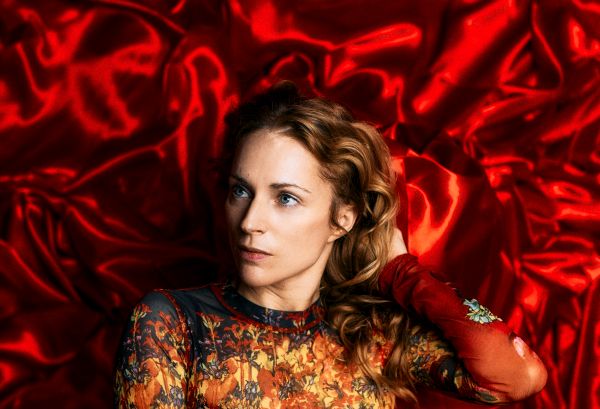
Singer-songwriter, multi-instrumentalist and producer Agnes Obel announces her new studio album – a follow-up to the widely acclaimed Myopia (2020). The Meaning of Flowers is woven together from different strands of thought and inspiration by one of the most curious minds in contemporary music today. Through its 12 tracks, Obel explores the heightened sense of interconnection with all living things she experienced during pregnancy and, among other themes, the significance of birth, growth and metamorphosis in the natural world. Her new music draws on a broad range of sources, from the poetry of Enheduanna (the world’s first named author) and the ideas of philosophers Hannah Arendt and Emanuele Coccia, to the Danish pop scene of the ‘80s and ‘90s.

Written, recorded, arranged and produced by Obel in her own studio in Berlin, The Meaning of Flowers features Agnes herself on vocals (some pitch-shifted), piano, keys, synths and samples. Guest musicians join her on violin, viola, cello, bass, lap steel, harmonium, flute, sax, percussion and backing vocals. The album comes out on Deutsche Grammophon – digitally, on CD and on vinyl – on September 18th 2026. As a taster, “Laymelli” is available to stream and download today.
Since recording Myopia, Obel has given birth to her first child. The Meaning of Flowers reflects the emotional impact of motherhood, Obel’s intellectual interest in the subject – notably Arendt’s concept of natality, “understood as the human capacity for new beginnings” – and the fact that the temporarily altered neuroplasticity of her brain took her thought and compositional processes in fresh directions.
“I wanted to see if I could get close to the feeling of a new beginning,” says Obel of the title track. “It shows itself in the experience of interconnectedness and a new expansive feeling of love that will never end. The point when the inner monologue becomes something interactive and expansive – beyond your own life – and opens your mind to a new and richer notion of life.”
“Blood so Red” and “Gemini” emerged as Obel was “playing around” with rhythms, piano and voice. “Blood so Red” came from her reading of Enheduanna’s hymns to Inanna – goddess of childbirth, love, sex, song and war – whose presence “made its way into the song, lifting up my own epiphanies on childbirth and the laws of the body and these experiences outside of language that link us across time and space”. “Gemini” and “Laymelli” too were inspired by Enheduanna, but also by Obel’s awareness of a complex universe “held together by the beauty and power of life and metamorphosis.” She drew on Coccia’s Life of Plants and Metamorphoses for the imagery of seeds and the life cycle of a butterfly.
There are other influences here too, including ‘70s movie scores in “Don’t Look Down” and Danish pop in “Never Been”: “In the ‘80s pop song world, to love was to be free and who you are unapologetically.” And Obel employs a joyful combination of timbres in “Tangerine,” the only instrumental track, as sax arpeggios join celesta and piano, in a “bubbly new wondrous friendship”.
Agnes Obel – forthcoming tour dates:
22 Aug – KUNST!RASEN, Bonn ·
23 Aug – Golden Leaves Festival, Darmstadt
26 Aug – Openluchttheater Caprera, Bloemendaal ·
27/28 Aug – Amsterdamse Bostheater, Amstelveen
24 Sep – Queensland Performing Arts Centre, Brisbane ·
26 Sep – Hamer Hall, Melbourne
27 Sep – Sydney Opera House ·
29 Sep – New Zealand International Convention Centre, Auckland
#agnesobel