
Paris WYA
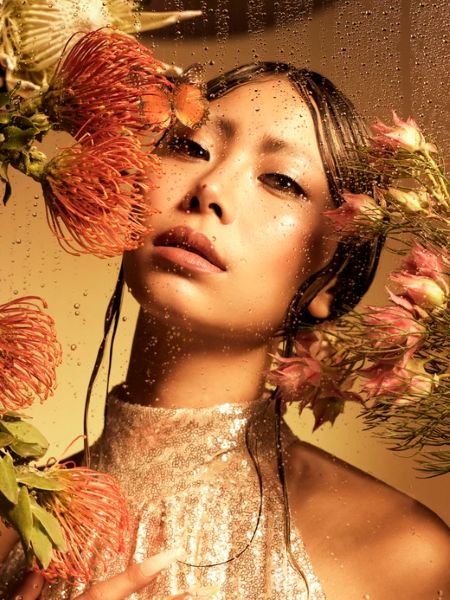
Raised across Asia, Europe, and the United States, Paris WYA is a fearless, cosmopolitan pop artist whose music blends impassioned lyricism with a globally inspired perspective. Born in Shanghai and now based in the US, she has been immersed in music since childhood, learning to play the guitar, piano, and drums while developing her vocal abilities and performance skills. A student at Cornell, Paris WYA has already released two EPs, UNTANGLED (2024) and GLITCH (2025), that showcased her range from edgy, digital-first pop to synth-driven high-fidelity productions.
On May 1st Paris WYA dropped her latest EP, MANNEQUIN. Produced by Adrian Cota, Jean Castell and Morgan Taylor Reid the EP includes the singles “More Balance”, “Hate You More”, “Only Time Will Tell” and “Treat Me Right.”
FEMMUSIC spoke with Paris WYA about the EP.
#paris.wya
FEMMUSIC: What was the biggest challenge making MANNEQUIN (The EP)?
P: The biggest challenge was starting over, both sonically and personally. I was in a period of a lot of change, dealing with grief and anxiety, and felt a lot of pressure to create something that honestly reflected who I was becoming
Adrian Cota and I built the world of MANNEQUIN from scratch, starting with a shared playlist that became our north star. From there, the sound revealed itself as we went. A lot of the emotional throughline came from conversations we had in between takes – talking about losing someone who, at the time, was my whole world, navigating a pretty tumultuous start to my artist journey, and feeling completely lost. I was learning how to be on my own again, how to live for myself, and rediscover who I was.
The challenge was trusting that process – letting it be messy and uncertain in the beginning, and believing it would turn into something whole, something that felt honest and vulnerable, but still shiny, dreamy, and beautiful.
FEMMUSIC: What lessons did you learn in making UNTANGLED and GLITCH that helped in making MANNEQUIN?
P: UNTANGLED and GLITCH were really experimental for me – very electronic, futuristic, a little tongue-in-cheek. It was fun to explore that space, but it also made me realize I wanted to create something that reflected my musicianship more honestly.
At the start of my artist journey, I was in a situation where I felt pushed into a version of myself that didn’t fully fit, and MANNEQUIN really became about breaking out of that. One of the biggest lessons I learned is how important the right collaborators are – they should amplify your vision, not reshape you into something that doesn’t.
You can really hear that shift in the music. There’s a lot more intricacy in MANNEQUIN – the production, the layering, the harmonies, the adlibs, the vocal stacking – and I was really intentional about pulling from the music I love and making it my own. There are even small personal details and easter eggs woven into the lyrics.
It feels like the most fully realized version of me so far, and the beginning of truly recognizing my own voice.
FEMMUSIC: Tell me about Morgan Taylor Reid. How did you meet? What made you want to have him as a producer on the EP? What did he bring to the project?
P: I met Morgan through a really organic chain of connections. I had been working with the iconic Belgian fashion duo Domen and Van Develde on the visual direction of my project, and they introduced me to songwriter Ameerah Roelants, who became a great mentor to me. She brought me into a songwriting camp where she often collaborates with Morgan, and that’s where we met. That session ended up producing two songs on the EP: “Hate You More” and “Mannequin.”
Morgan is just incredible. He’s extremely talented but has zero ego – he’s so open, detail-oriented, and genuinely committed to bringing the artist’s vision to life. He’s also a great instrumentalist, which made it really easy to find a melodic starting point and get the writing flowing. I honestly became a better musician just through being in the studio with him.
He also played a huge role in completing the sonic world of the project. We went into day one of writing camp looking to create a high-energy pop banger to round out the project. “Hate You More” went through a lot of iterations: it started out sounding more like a pop punk track (think Paramore, Avril Lavigne), then became a ballad, and neither felt right. Through working together we were able to pull it into the dreamier, more cohesive sonic world of MANNEQUIN.
“Mannequin” was the opposite, it came together really quickly on the last day of camp, because it reflected exactly where I was in my life. It’s a power ballad that felt different from the other songs, more personal and inward-facing. I remember tearing up the first time we played it back, which had never happened to me before listening to one of my own songs. At that moment, we all knew it was the heart of the project, and it had to be the title track.
FEMMUSIC: Tell me about Adrian Cota. How did you meet? What made you want to have him as a producer on the EP? What did he bring to the project?
P: Adrian Cota is undeniably one of the most talented people I’ve ever met. He has an ear that builds universes, almost instantly. I like to say that every track of mine he touches has a sparkle to it. I really have him to thank for creating the sound of MANNEQUIN with me.
I heard about him through a family friend and we set up a meeting during my Thanksgiving break from college in LA. On the way there I was actually in a car accident, so I showed up completely frazzled, but somehow that ended up being one of the most important meetings I’ve had. We just talked about life, music, listened to different songs together, and it was quite instant that I think we both knew we wanted to work together.
Before that meeting I was honestly feeling a little stuck, unsure where to take my music next, feeling stagnant. Adrian helped me realize that what I’m capable of is boundless. He pushed me constantly in the studio, to experiment, to try the most difficult thing I could do that day, and I grew so much as a musician working with him. We built the sonic world of MANNEQUIN together, starting with a shared playlist, and I’m so grateful for everything he brought to this project. He helped me refind my fire in songwriting, particularly with harmony and melody.
FEMMUSIC: Can you describe your songwriting technique? How has it changed over time?
P: My process usually starts with melody – whether it’s a chord progression, a bassline, or a hook. That’s what comes most naturally to me. Lately, I’ve really been enjoying writing collaboratively because it keeps the process dynamic and pushes ideas further than I would on my own. Being in rooms with other songwriters has helped me grow a lot.
Lyrically, the biggest shift has been allowing myself to get really specific. I’ve learned that the more personal you are, the more relatable a song becomes. That used to feel counterintuitive, but now I really lean into it. My writing has become more detailed, more visual, and more honest. There’s a line in MANNEQUIN: “she’s gonna go far, straight to the Ivy League” that I added as a small nod I knew my friends at Cornell would appreciate.
In the studio, I try to stay open and instinctive. Some of my favorite moments on this EP came from just following a feeling – building songs from scratch in a couple of hours after hearing the right progression or the right stem. Those moments remind me not to overthink and to trust where the music wants to go.
FEMMUSIC: Tell me about “85.” How did that song develop?
P: “85” is about the kind of love you dream about when you’re little, the kind that grows with you. It’s not just the butterflies, but the best friend, the soulmate, the person you still want beside you when you’re old and gray. It’s meant to feel tender and timeless.
Whenever I sing it, I think about my grandparents and their love, which has always felt like the most genuine kind to me. My grandfather passed away recently, and in a lot of ways, this song feels like a tribute to him and his endless capacity for loving.
FEMMUSIC: Tell me about the title track, “Mannequin.” How did that song develop?
P: “Mannequin” was actually the last song I made for the EP, and it ended up being the final track as well, which feels really full circle.
The title came from this feeling of being shaped into something. A mannequin is perfect on the outside – dressed up, posed, picture-perfect – but hollow on the inside. That contrast really reflects my experience growing up, especially navigating the Asian-American experience, where there’s this weight of expectation around who you’re supposed to be and what you’re supposed to achieve. Going to Cornell, I felt that really strongly: “straight to the Ivy League, marry a plastic king.” Some of that pressure was external, but a lot of it had become internal, which is the more unsettling part.
The bridge comes from a very personal place. I grew up feeling like every decision I made was wrong, like I was being controlled in small, everyday ways. So the line “tell me what I want, tell me what I need, ‘cause clearly you must know much better than me” is sarcastic, but it’s also coming from a real place of confusion. After a while, you start to question whether you’d even know what you want if you had the freedom to choose. That’s really what “if I could be me, who would I be” means to me.
I remember tearing up on the first playback, which had never happened to me before. It felt like the most honest thing I’d made. And the last line, “maybe I could fly free?” was very intentional. I’m graduating and moving to LA to pursue music, and it’s the first decision I’ve made completely for myself. It feels like stepping into the unknown, but also finally choosing my own life.
FEMMUSIC: Do you have an artist you’d like to collaborate with, or tour with? Why?
P: I’d love to collaborate with or tour with Glass Animals. I’m really drawn to their storytelling and how they build such immersive, textured sonic worlds. Their songs feel vivid, detailed, and emotional all at once, which is something I strive for in my own music. I actually just soloed “The Other Side of Paradise” at my final a cappella concert at Cornell, so I feel a really personal connection to their music.
FEMMUSIC: What one thing would you like to change about the music industry?
P: I think there’s a lot of pressure, especially early on, to become a version of yourself that’s easier to define or market. I’ve experienced that firsthand, and it can take you pretty far away from who you are. There’s also this feeling that if you’re not going viral, you’re stagnant – like you’re going nowhere – and that’s a really suffocating way to create.
I’d love to see more space for artists to figure themselves out in real time, because that’s where the most meaningful music comes from.