
Mary Ocher – On The Streets of Hard Labor (Revisited)

Mary Ocher has developed a fiercely independent voice shaped by displacement, political rupture, and life on the cultural margins. The adventurous Berlin artist returns with a piano record, written on a classic instrument from the 1870s, marking a departure from recent experimentations with post-punk, krautrock, ambient and field recordings.
Weimar, out March 13th via Underground Institute, draws on 20th-century minimalism, chamber-pop, and modern classical. Yet it remains unmistakably Ocher, thoughtful and grounded in emotional depth.
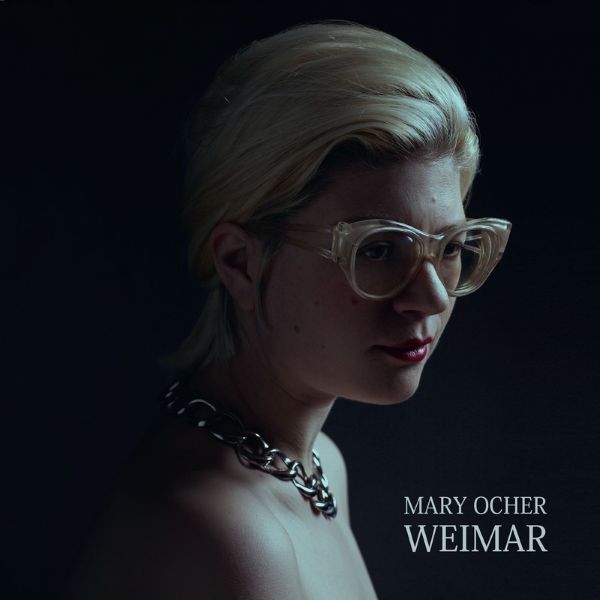
Born in Moscow to Jewish-Ukrainian parents and raised in Tel Aviv during political turmoil, she learned to question authority and narrative at a very young age, and that doing so came at a hefty price – as each generation of her family relocated with changing political tides.
At twenty, after refusing the draft, she left for Berlin, where she became a central underground figure, known for her uncompromising mixture of art and politics, and critical writing on nationalism and war, releasing records with political manifestos, making DIY films, performing in national theaters and museums, as well as queer sex clubs.
Admired by Karen O (Yeah Yeah Yeahs), Animal Collective, and Sean Lennon, and having collaborated with the likes of Mogwai, King Khan, Julia Kent, Felix Kubin, Die Tödliche Doris, and Roberto Cacciapaglia, Ocher is respected for fearless experimentation.
Her new single, “On The Streets of Hard Labor (Revisited),” is out today.
It’s a striking re-working of the 2011 favorite from her debut album War Songs, and features a video directed by British director Paradox Paul. In it, the director takes the post-Soviet tale global, at a time where the East and the West are beginning to look more and more alike.
Packed with symbolism, the video starts and ends in Moscow and 1984, after examining the descent of the Western powers’ (UK, US) into greed and corruption. In the video, various animals represent different cogs in the structure of fascism, totalitarianism, and conformity, as Ocher’s buoyant piano and confident voice provide the soundtrack.
As she did with her previous video directed by Boris Eldagsen for “The Narrative (First Movement),” Ocher again finds herself working with an AI artist who prioritizes thought-provoking commentary and whose work is crafted intentionally to challenge the confines of the medium itself
“I met Paul years ago, when I was 20 and new in Berlin, it was a different Berlin then, he had a gallery, you could be a visual artist and have a gallery then without having to be loaded. It was a curious large space with permanent, and semi-permanent installations and fixtures, and a variety of pianos, in different stages of decomposing, and all out of tune,” she details. “I performed at an opening, perhaps a couple, and Paul played a character in my fictional documentary The Sounds of Softness. I think I used to make art for the sake of making it back then. Now I make it because I have to, for a living.”
“I know that AI has become divisive and to be honest, there’s a lot of very bad AI work out there, but there are some exceptional artists who work with the AI, not the other way around,” Ocher says about her work with these artists. “Artists who work slowly, use manual post production, and produce very interesting social commentary.”
Ocher has also penned a new essay entitled “Weimar: Reflections on History, Narrative, and Resistance,” which deftly ties the rise of authoritarianism worldwide to historical patterns. It’s a prescient work that complements the themes running through the upcoming album.
Following extensive touring across Europe, the UK, Australia, North America and New Zealand, and a catalog celebrated by The Quietus, The Wire, Fader, Paste, Libération, and others, Ocher stands at a pivotal moment. As nationalism, censorship, and cultural fragmentation rise the world over, her examinations of identity, fear, and belonging feel absolutely essential.
Weimar arrives not as a departure, but as the moment an underground icon steps, finally and unmistakably, into a broader public light.
| Mary Ocher Tour Dates |
| 3/7/2026 Worldwide – Bandcamp Listening Party (7pm CET) |
| 3/13/2026 Berlin – Galiläakirche (Weimar Album Release Show) |
| w/ With Panel Talk: Individual Freedoms & Censorship – Past 100 Years to Today |
| 3/15/2026 Brighton – The Folklore Room |
| 3/17/2026 London – Servant Jazz Quarters |
| 3/18/2026 Glasgow – BLOC+ |
| 3/19/2026 Newcastle – Cobalt Studios |
| 3/20/2026 Leeds – TBD |
| 3/21/2026 Bristol – The Old England |
| 4/1/2026 Zagreb – Močvara |
| 4/2/2026 Ljubljana – Gala Hala |
| 4/3/2026 Vicenza – Caracol Olol Jackson |
| 6/18/2026 Ghent – GUM Plantentuin |
| 6/19/2026 Brussels – Atelier210 |
| 6/21/2026 Marseilles – Fête de la Musique (Dreamachine) |
| 6/26/2026 Svitavy – Festival Rosnička |
| 10/3/2026 Nantes – Sonocraft Festival |
| 10/16/2026 Leipzig – Horns Erben |
#mary_ocher