
Leslie Gaston-Bird – Audio Engineer
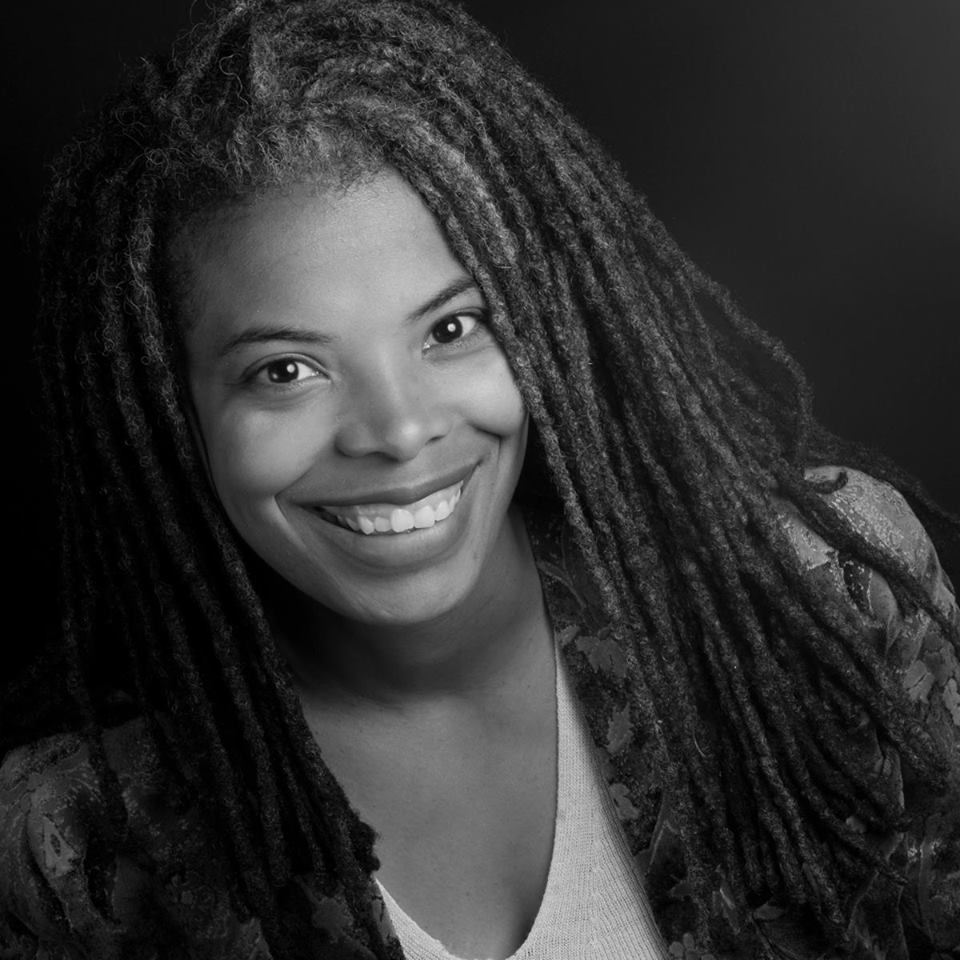
Name: Leslie Gaston-Bird
Title and Company or Organization: Vice President (Western Region, USA & Canada), Audio Engineering Society, Associate Professor, University of Colorado Denver
Artists or projects worked with: Ezmeralda (bass, backup vocals), “Doc of the Dead” (Re-Recording Mixer), “Klocked” (Re-Recording Mixer), “Feral” (Re-Recording Mixer), Colorado Symphony Orchestra (Recording Engineer), Gregory Walker (Recording Engineer),
Restoration projects at Post Modern Company for Sony Pictures. Titles include The Partridge Family, The Flying Nun, Hart to Hart, and many others.
Linkfacebook.com/LeslieGastonBird/
FEMMUSIC: How did you get started in studio production?
LGB: I got started in studio production when I started my degree at Indiana University, Bloomington. I studied Audio Technology and received an A.S. degree. At that time, the Bachelors degree did not exist. My B.A. is in Telecommunication. I worked at the campus radio station there, WFIU-FM, an National Public Radio member station. We received all kinds of alerts about satellite feeds, but the same system also posted job openings. I saw one for Broadcast/Recording Technician at NPR. I was hired at NPR in Washington, DC in 1991, just a few months after graduating. I lived in D.C. for four years but I did not do a lot of music production. I am a classically trained pianist and I also played snare drum in high school. I wanted to get back to playing music so I joined an all-female, African American metal/reggae group called The Medusa Complex. It was great! I left that band and moved to Denver, then joined an all-female group called Ezmeralda. I engineered both of our albums, “Half Gramme Holiday” (on a Digi 001 using a PowerMac 9600) and “Immortal” (on a Pro Tools HD system). I also did post-production at Post Modern, which included restoration of film and television soundtracks from Sony/Columbia Pictures
.
FEMMUSIC: How did you come to the program at UCD?
LGB: I am a child of the analog age (I have scars from editing analog tape with razor blades to prove it), and as our field moved towards digital and data compression I felt the need to expand my audio education. In 2002 I enrolled in the Master of Science in Recording Arts degree at UCD. I met two important mentors there, Roy Pritts and Rich Sanders, who encouraged me to apply for an Assistant Professor job. Our program is, to my knowledge, the only one that has a class on audio pedagogy (teaching audio). I was hired in 2005.
FEMMUSIC: What challenges do you see for women in studio production?
LGB: I think the biggest challenges for women in studio production is there are too few women coming into the major or field. Once they are trained, women become successful, but we are starting with so few in the first place. And it doesn’t seem to have anything to do with how early we expose girls to the profession: “something happens” during those pre-teen years to discourage women from STEM fields in general. It is true that the classroom dynamic can be challenging. As an educator, I have had a few women tell me they don’t feel like they’re “keeping up with the guys” when they are actually outperforming their male peers academically. I have heard similar stories from other professors. That doesn’t mean that all women are smarter, I just question the social dynamics that makes certain women feel this way. On the other hand, some women are perfectly comfortable and don’t perceive any roadblocks. It is fascinating to hear the two sides of this issue. One side says, “women can do anything, your obstacles are all in your head” and the other says, “obstacles to women’s success are blatantly apparent and the biases are real”. I believe both are true to a degree. I have been looking at this issue and I am intrigued by the idea of learning environments geared solely towards women: not because it excludes men but because it empowers women. I believe women can succeed in both environments, but the fact is that in the USA the numbers of working female audio professionals is embarrassingly low. Whatever solution you believe in — whether it’s a co-ed solution or a gender-exclusive environment — I think we all agree it can be much better.
FEMMUSIC: What mentors did you have when learning?
LGB: David Pickett and Wayne Jackson were great educators at Indiana. Roy Pritts and Rich Sanders were my professors at CU Denver. Dave Malham is a great pioneer in the field of Ambisonics who hosted my Fulbright appointment in York, UK. I look up to many of the scholars and professionals in the Audio Engineering Society, so I would point to that organization as an amazing network of information and knowledge.
FEMMUSIC: Are women in studio production treated differently than men? How do you see this?
LGB: I think that studio dynamics differ from one studio to the next and depends on the attitude of the client and employees. The professionalism of everyone involved is a factor (whether it’s a supportive or hostile environment). I have heard some horror stories about job interviews and office politics, but nothing upon which I would base a generalization.
FEMMUSIC: What advice do you give to women wanting to go into studio work?
LGB: Advice to women wanting to go into studio work? How about “stay woke”? (laughs) Going back to what I said earlier, I believe you really can succeed if you are into the technology and the troubleshooting process and the creative process. I have had a rewarding career. This is a great field if you love music and technology. I cannot imagine doing anything else with my life. Know signal flow. Experiment. Make mistakes. Train your ears with critical listening and ear training exercises. Seize upon opportunities to network and by all means join the Audio Engineering Society. Record as much as you can, whenever you can.
Yes, there is definitely some bullshit out there, and you need some objectivity to know whether it is a real bias or an imagined one. That objectivity can come with time and maturity, but never believe something is “just in your head”. If you smell a rat, then you should talk to people – men and women – about what is going on. “I never think you should stay silent and believe that you’re not a troublemaker or an insecure female if you speak up.”
FEMMUSIC: What one thing would you change about the music industry?
LGB: There are so many changes happening in the music industry right now, as soon as I name something I’d change someone will say “but we’re already doing that”. So for now I am enjoying seeing all of the innovation that is taking place. Musicians and engineers who want change are creating change right now and it’s actually a great time to be part of it.