
Angie Dickinson Mickle – Recording and Sound Engineer
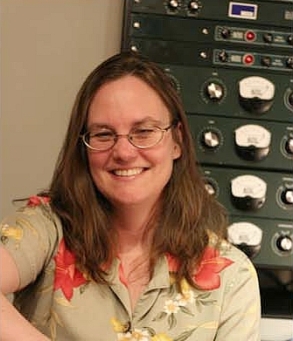

Name: Angie Dickinson Mickle
Title: Recording and Sound Engineer
Company or Organization: Avocado Productions/Zephyr Room
Artists or projects worked with: Jeff Finlin, Eric Genuis, Grant Sabin, Steve Francque, Vedanta Archives, Notre Dame Archives
Links: avocadoproductions.com
https://soundbetter.com/profiles/15972-angie-dickinson-mickle
FEMMUSIC: How did you get started in studio production?
ADM: I started with a reel-to-reel tape machine in my bedroom. It was a 16th birthday present from my parents. I wasn’t much of a musician, but I knew I wanted to be involved in the creative side of music. That recorder deepened the passion for me. I learned how to edit tape on that machine; how to create loops and other effects tricks.
A degree in audio production at a four year college or university was unheard of when I graduated from high school. There were vocational programs and classes at local studios. But my parents would only pay for me to go to college. I ended up at Columbia College Chicago where Malcolm Chisholm who had been the engineer for Chess Records and worked with Bill Putnam at Universal Recording had started teaching sound classes in the TV department. This was 1981. I took all 3 semesters offered at the time.
FEMMUSIC: Why did you want to start your own studio? What benefits & drawbacks does that have?
ADM: I started the studio originally out of necessity. I was still living in my hometown, west of Chicago, and there were very few studios in the surrounding area; none at all in my town. I did a lot of remote recording, but needed a place for overdubs and mixing. Overseeing the day to day operations and keeping the studio booked can really take you away from the fun in the studio. Those are the biggest drawbacks for me. I guess the benefit is familiarity of the way my studio is set-up. I can just walk in knowing exactly how everything is routed and how I’ll be starting the session.
FEMMUSIC: What challenges do you see for women in studio production?
ADM: The biggest challenge is overcoming perceptions. There are assumptions that some how just because we are women, we must not have the experience or the know- how to run a recording session or mix a project. As if men are somehow born with the ability to understand recording and sound.
FEMMUSIC: What mentor did you have when learning?
ADM: There have been a few. There was an engineer I assisted for in Evanston, IL. I believe he left the business quite some time ago. But I learned a lot about how to deal with clients from him. He had a great way of calming everyone down when tensions flared.
My most important mentor was my late husband, Chris Mickle. He was a better Producer than he thought he was. In actual fact, we advised each other. I’m pretty proud of the projects we worked on together.
I have to say, though, that I never stop learning and seeking advice from other engineers and producers I know.
FEMMUSIC: Are women in studio production treated differently than men? How do you see this?
ADM: When I started as assistant engineer at that studio in Evanston, it wasn’t unusual to be mistaken for the chief engineers girlfriend or an office girl there to get them coffee. I wasn’t taken very seriously. I would like to say that this is changing. In some ways it is. I feel much more acceptance among fellow engineers, but clients still have per-conceived ideas of roles in the studio.
FEMMUSIC: What advice do you give to women wanting to go into studio work?
ADM: Just do it! Seek out women as mentors. There are more of us out there than you’d expect. Getting involved in music organizations offers great networking opportunities. Most of all, don’t be afraid to reach out to an engineer of producer whose work you admire.
FEMMUSIC: What one thing would you change about the music industry?
ADM: You don’t want me to go there! I doubt you have enough space.