
Meg Okura – Isaiah
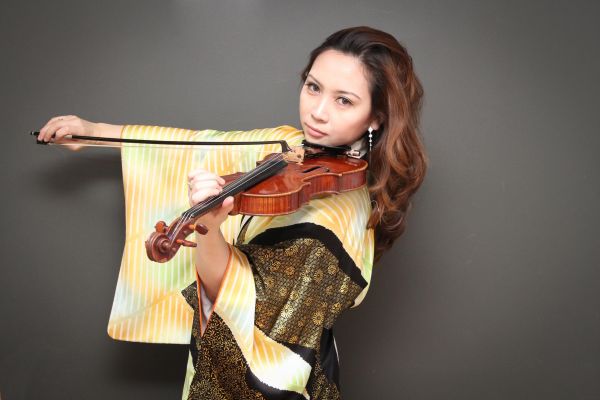
Today, Violinist, composer, and outspoken cultural iconoclast Meg Okura returns with Isaiah on Adhyâropa Records — a radiant new album marking the 20th anniversary of her Pan Asian Chamber Jazz Ensemble (PACJE) and the arrival of a fully realized jazz-composer voice shaped by a lifetime across musical worlds.
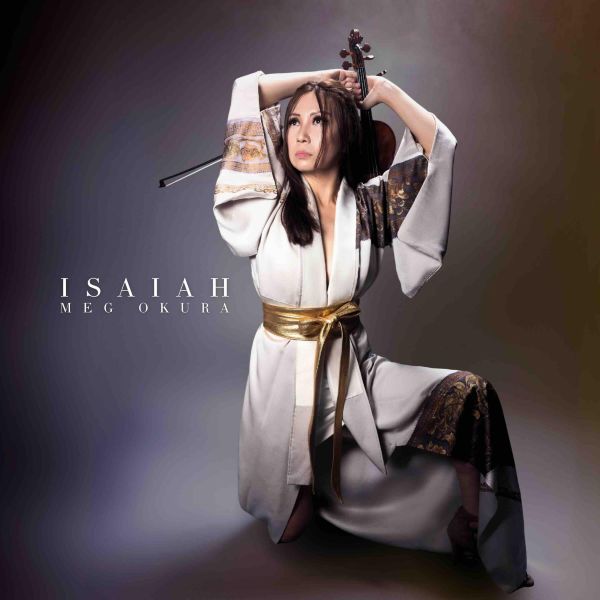
Isaiah is a testament to Okura’s extraordinary achievement as a composer: fresh off a major symphonic milestone, she recently returned from Long Beach, CA, where she premiered her Shaon Overture—a work for 68-piece Symphonic Jazz Orchestra featuring Okura as the jazz violin soloist—as the winner of the SJO George Duke Commissioning Prize. She was also honored with the International Society of Jazz Arrangers & Composers’ Fundamental Freedoms Commission, placing her firmly among today’s most original compositional voices.
Long acclaimed as a virtuoso violinist, Okura has increasingly emerged as one of contemporary jazz’s most distinctive composer-bandleaders. Isaiah deepens her reputation as a boundary-crossing innovator whose artistic voice is tied to an ongoing process of self-definition.
Drawing on her lived experience and the ensemble language she has built over two decades, Okura describes the new album as “a musical memoir of my shifting identities… a realm where I am not an outsider.” From her upbringing in Japan, to her embrace of Judaism, to her life as a Japanese Jewish American in an interracial family, Okura uses composition as a space where these identities coexist.
“Through PACJE, I have shaped a sound distinctly my own, not bound to a single style but defined by the freedom to move among them,” she writes in the liner notes — a sentiment the album expresses with cinematic sweep, chamber-music intimacy, and the rhythmic fluidity of modern jazz.
Featuring Okura’s longtime PACJE collaborators, Isaiah unfolds as an emotionally rich, stylistically expansive suite. The opening track, “Sushi Gadol,” pays tribute to her brother and bursts with explosive gestures and restless energy, establishing a spirit of defiance.
“Blessing,” inspired by the Pre-Haftarah Blessing she and her daughter both chanted at their bat mitzvahs, reframes sacred melody through orchestral and jazz-waltz textures.
The album’s centerpiece, “African Skies,” reimagines Michael Brecker’s iconic Brecker Brothers composition through the lens of Okura’s composition “Afrasia,” turning a foundational influence into something unmistakably her own. Okura toured with the late tenor saxophonist, thus the piece is central to her identity as a musician, with Michael’s brother, Randy, as guest soloist, furthering the Brecker legacy.
“Rice Country,” composed during her Aaron Copland House Residency, explores immigrant identity through a Japanese pop fragment refracted into Copland-esque Americana. “Jubberish,” commissioned by Chamber Music America’s New Jazz Works, transforms her daughter’s childhood phrase (“Gibberish, but Jewish”) into a playful, imaginary folk language.
Performers include flautist Anne Drummond, clarinetist Sam Sadigursky, pianist Brian Marsella, guitarist John Lee, bassist Evan Gregor, and drummer Peter Kronreif, alongside special guests soprano saxophonist Sam Newsome, trumpeter Randy Brecker, alto saxophonist Remy Le Boeuf, and percussionist Rogério Boccato — artists whose sensibilities amplify the album’s emotional breadth.
With Isaiah, Okura is also stepping into a broader public role as a writer, speaker, and cultural thinker. Her brand new Substack newsletter and podcast, Meg’s Un-Kosher Notes will explore the intersections of identity, faith, race, art, and freedom of expression — extending the conversation that her music begins.
#megokura