
Kitba – Hold The Edges
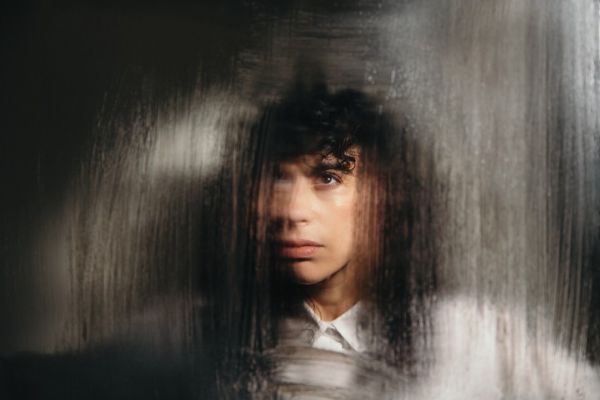
Rebecca El-Saleh’s work as Kitba is meditative and deep. Today, the Brooklyn-based harpist and songwriter announce their new full-length Hold the Edges, out September 19, 2025 via Ruination Record Co.
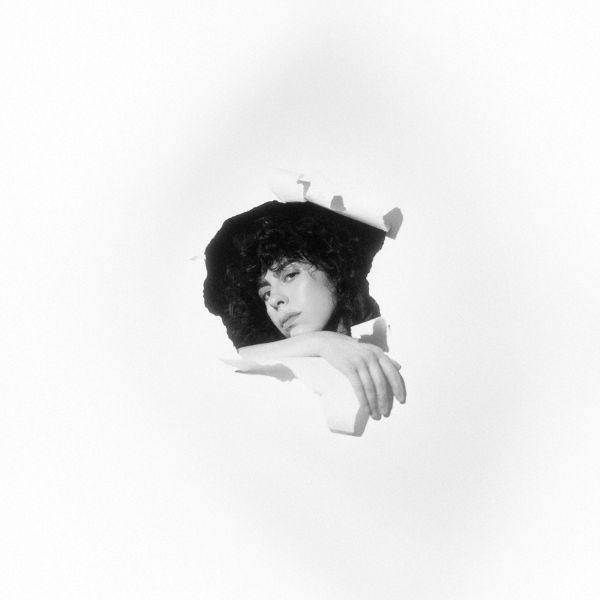
They have also shared the title-track as a single, which contrasts plaintive, filtered vocals and noisy undercurrents.
“Sometimes I give up / I stop trying / I can’t give more than I have / But then I pour from an empty cup,” they sing in the third verse. Repurposing a mantra that El-Saleh clung to during a challenging time, “Hold The Edges” is muted, yet flush with emotion. The song is accompanied by a moving lyric video made by Christopher Royal King (This Will Destroy You.)
On the single, Kitba shares: “This song means so many things to me. It began as a sort of mantra I used through a challenging moment I was finding difficult to move through, but over time it shifted and the meaning transformed. What started as a desire to hold onto definition became an invitation to go beyond it. This song also unlocked an important texture of the album – the first time Zubin Hensler (who produced the record) put my voice through formant-shifting I burst out crying. It was such an involuntary, physical response to hearing something reflected back to me that I heard in my body.”
Relationships have a way of pinning us down. We become who we are perceived to be, held under the gaze of another. But what happens when those pins begin to buckle? Who do we become when we leave the frame, and the edges that have contained us start to dissolve? These are the questions that shimmer at the heart of Hold the Edges, the prismatic second full-length album from Kitba, the musical moniker of Brooklyn-based artist Rebecca El-Saleh.
In early 2024, El-Saleh was in the soupy aftermath of a loving long-term relationship and cascading out of a bad rebound. El-Saleh, who is non-binary, had recently come to terms with their new gender identity and was struggling to find their footing in relationships as their own perception of themselves fluctuated. In the midst of this tender time of self-discovery, they took part in a song-a-day songwriting challenge, churning out new material in a quick and fruitful process of uncovering that brought all their swirling feelings to the surface. Within a month, they had enough songs for a new album.
The album opens with the title track, “Hold the Edges,” a meditative slow burn built upon an earthy synth riff that propels the song forward, pulling the listener in as if leading them with an unspooling skein of yarn into a new world. The repeated phrase “hold the edges,” El-Saleh explains, emerged at this time as a mantra to keep a sense of security in place, to hold onto something at the moment of internal fracture in order to remain tethered. And yet, through the process of writing and recording, the phrase itself started to shapeshift. What began as a call to hold onto the established framework became an invitation to explore what lies beyond its outer limits. Like an M.C. Escher drawing, El-Saleh found, what you think is an edge might actually be a portal.
For Hold the Edges, El-Saleh once again teamed up with producer Zubin Hensler, their longtime friend and collaborator, who also produced Kitba’s self-titled 2023 album. There’s a sense of confidence that resounds across the new collection, as well as a stylistic freedom that only comes from a deepening level of trust between musical partners. “There’s a lot of Zubin in the album,” El-Saleh says, reflecting on the enormity of Hensler’s contributions, while pointing out the respect he showed throughout the process. “He gives so much of himself and his voice, but only to support the thing that’s happening.”
In Hensler’s recording studio in Philadelphia, the two crafted the bold technicolor sound world of Hold the Edges, which blazes with bright synths, warped harp, swaggering guitar licks, and pummeling drums. From the drill-bit beats of “Fool” to the clarinet flourishes of “Outside/Inside” to the frenetic band-driven crescendo of “Ruins,” there’s a no-holds-barred approach to the arrangements that seems to mimic El-Saleh’s own attitude to being pinned down. “No song was kept in a box from the beginning,” they explain. “We followed the direction that each one called out.”
But it’s not just the production that feels more confident and ambitious on this album, setting a new bar for Kitba–it’s the vocals. El-Saleh grew up singing in choirs and developed what they call a “twee” voice, an airy tone made for blending in. On the new album, though, they began to lean into a darkening timbre, inviting in a rounder, more grounded sound. Hensler and El-Saleh took this idea a step further on the title track, using a formant-shifter to alter and deepen the lead vocal. “The second Zubin put my voice through that effect, I started crying, and I couldn’t stop crying through the first few takes,” El-Saleh reflects. “Hearing my voice like that was so powerful. It was lower, more ‘masculine’…It’s the way I hear myself in my body, or the way that I want to be heard.”
The vocal experimentation continues across the ten tracks. On “Soften,” El-Saleh’s voice is molded into a childlike auto-tune as they acknowledge, I’m so hard in my heart. / I’m trying to soften. “Outside/Inside opens with several layers of them humming with their cheek pressed into the pick-up bar of the harp, activating the instrument’s resonance. The chorus of “Cards” brings back El-Saleh’s “twee” voice, a wispy moment of high angelic brightness that shimmers like a memory. “This record is really the journey of my voice–the ambiguity and the deepening around gender,” El-Saleh says. “Not feeling like I need to be limited.”
Another instrument that is pushed past conventional limits on Hold the Edges is El-Saleh’s primary instrument. El-Saleh is a classically trained harpist and has recorded and played with artists like Half Waif, JG Thirwell, and This Will Destroy You. But over the years, they’ve developed a complicated relationship with it. “For a long time,” they admit, “playing the harp was not joyful at all.” They felt pigeon-holed by the niche instrument, compelled to lean into virtuosic displays. They began to wonder if they even liked its inherent sound at all. Recording with Hensler, though, brought the joy back into their playing. El-Saleh gravitated more towards the electric harp, which better captured the quality of sound they craved, while Hensler used his skills to turn more recognizable harp sounds into unique and surprising textures that blend in with the synths and guitars. You can hear the instrument clearly at the beginning of “Never Will”–gorgeously plucked and radiant with warm distortion–but elsewhere it’s cleverly reshaped or recontextualized. It’s as if El-Saleh is challenging traditional perceptions of the harp just as they are challenging perceptions of themselves.
Throughout the album, El-Saleh grasps at the slippery notion of their own identity, arriving at the idea that it is only in being alone that you can fully see yourself. That it is, in fact, a balm to be able to define your own edges, even as they are in flux. All I am is now, they accept on “Tightrope/Island,” a song about staying small in a relationship and trying not to take up too much space. On “Fool,” amidst fuzzy rollicking guitars and a plucky four-on-the-floor beat, they say it even more plainly: I don’t know who I am / but I know I’m better without you.
“Wolf’s Mouth” sees El-Saleh taking their fate into their own hands, as they put their head inside a wolf’s mouth and ready themself for the bite. The chilling image comes from an actual recurring nightmare they had. “I wanted to be consumed or taken by it,” El-Saleh explains, “but I never actually felt terrified of the wolf.” Rather, it is an act of trust: to allow yourself to be taken, to be transformed. To allow a part of yourself to die. Over the insistent hammering of a saw-tooth synth and a disjointed beat that threatens to throw the center off-kilter, El-Saleh looks the fear square in the face and sings, Where’s my wolf now? I am ready.
And yet, even as El-Saleh finds strength within themself across these songs, Hold the Edges is ultimately not a rejection of relationship but an invitation to redefine it. Playing on the record, in addition to Hensler–who handles multiple instruments across every song–are El-Saleh’s longtime friends and collaborators Ryan Weiner (guitar), Jason Burger (drums), and Kristina Teuschler (clarinet). The album is, in many ways, the sound of friendship, of community, suggesting that perhaps a new kind of frame is made in the shape of the songs they’ve built together.
On album closer “Cards,” El-Saleh wonders again and again, am I enough to carry me through? The answer comes from the band, which sweeps in to create a bower of sound that grows in around them, carrying on long after the vocals have ended. In the final seconds of the album, the instruments drift away from each other, scatter like light, reform, wander off together. The edge is a portal. For Kitba, what sounds like an ending is only the beginning.
#kitba.music