
Carla dal Forno – Under The Covers
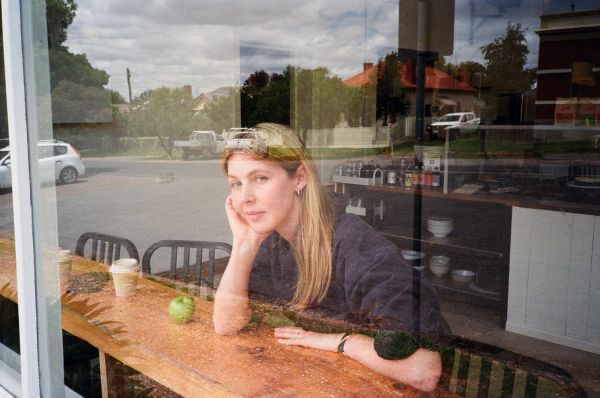
Today Castlemaine, Australia’s Carla dal Forno shares new single “Under the Covers,” the second song made available from the upcoming album Confession due out on April 24th via her Kallista Records imprint. “Under the Covers” draws on the romance of the ordinary found in The Cannanes and The Garbage & the Flowers, finding depth in routine and long-term intimacy. The song’s release is accompanied by a stop motion video using paintings by Ruth O’Leary.
According to Carla dal Forno: “This song is about the quiet kind of love—the kind that builds slowly in shared routines, small gestures, and the comfort of being understood without needing to explain yourself.” She adds: “I wanted to capture a love that isn’t dramatic or fleeting, but steady and lived-in—where intimacy shows up in ordinary moments, and understanding becomes its own kind of language between two people.”
“Under the Covers” follows the March release of lead single “Going Out” which came with a video directed by Hanna Chetwin.
Confession is an album of quiet upheaval.
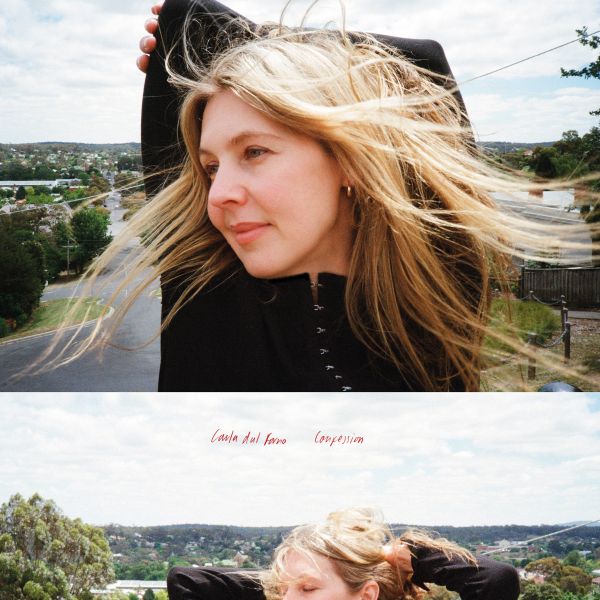
An album about closeness that arrives late and unexpectedly. About stability rubbing up against desire. About the way friendship can suddenly tilt into something charged — and how that charge unsettles everything around it.
“This wasn’t the album I intended to make,” says Carla dal Forno. “I originally wanted something veiled and abstract, but I realised I couldn’t hide behind abstraction — the songs only worked when I leaned into emotional truth.”
This is dal Forno’s fourth LP, written and recorded over several years in a small country town, in a studio housed inside a partially abandoned hospital. Long corridors, humming lights, emptied rooms — a place built for care and waiting, now quiet enough for thoughts to echo. That stillness shapes the record: intimate, watchful, unadorned.
“I live in a small country town that offers a stillness my life didn’t previously have,” she explains. “In that quiet, feelings I might’ve ignored in a busy city grew loud.”
The album moves through paired states: going out and staying in, wanting and withholding, devotion and distraction. Domestic calm set against private unrest. A long-held relationship offers safety and routine, while a newer connection opens emotional fault lines — longing, jealousy, fantasy, self-exposure.
“At the heart of the album is a friendship that became emotionally charged in an unexpected way,” dal Forno says. “That shift brought daydreaming, jealousy, tenderness, confusion, self-awareness — and eventually acceptance.”
The drama here is internal, incremental, lived.
Where earlier work often observed from a distance, Confession turns inward. The voice is closer, warmer, less shielded. Dal Forno sings plainly and conversationally, with an emotional precision that sharpens the everyday into something quietly unsettling. “Going Out” captures feeling in motion — heightened, looping, restless — dramatizing desire and fixation, while “Confession” pulls back, naming the vulnerability beneath it.
“In the end, Confession became the most personal, unguarded thing I’ve ever made,” she reflects. “I wrote plainly about what I was actually living through.”
The elastic basslines of “Going Out” recall Normil Hawaiians or Hydroplane, while “Confession” channels the plain-spoken intimacy and offhand whimsy of Marine Girls, Eddie Marcon, and Saint Etienne — subtle psychedelic dream-pop shaped by dub and post-punk economy.
Musically, Confession feels lighter on its feet than its subject matter suggests. Melodic basslines anchor the songs while guitars, harmonies, and gently off-kilter rhythms move around them. There’s a looseness, even a playfulness — “like the sensation of tension lifting once you finally admit something to yourself,” as dal Forno puts it. “Blue Skies” leans into a poppier register, echoing the brighter edges of Broadcast with cathartic resolve.
The album’s nocturnal pull surfaces on “Nighttime,” where desire loosens its grip on reality. Its slinky, dub-tinged edges nod to AC Marias and Dome — post-punk atmospheres where intimacy and disorientation coexist. “Alone With You,” a reworking of the Sunnyboys’ classic, follows naturally from this mood: where the original is bold and outward, this version turns inward, desire tinged with hesitation and introspection, tying the album’s emotional thread to a wider musical lineage of longing.
Instrumentals appear throughout like pauses in thought. “Drip Drop” shifts the album’s internal weather; “On the Ward” absorbs the eerie calm of the hospital itself — a dub-inflected bassline walking you through echoing corridors — while “Off the Beaten Track” wanders outward and “Staying In” folds the record back in on itself.
“The instrumental tracks work as emotional interludes,” dal Forno explains. “Little pockets of space where the story breathes without words.”
The album traces a subtle arc: attraction blooming where it shouldn’t; obsession quietly taking hold; fantasy overtaking reality; clarity arriving slowly, sometimes painfully. “I Go Back,” written during afternoons spent painting outdoors, turns toward nature as a way of recalibrating — pastoral and hazy, recalling Virginia Astley, Pram, and The Fates.
“Being alone in nature helped me make sense of what I was feeling,” she says. “Gave You Up” closes the record quietly, a moment of acceptance without bitterness, where imagined futures are released.
Visually and emotionally, Confession returns to modest spaces: backyards, beds, night streets, overgrown paths.
“The record exists in that contrast,” dal Forno reflects. “Peaceful surroundings, unsettled interior.”
Like all of dal Forno’s work, Confession resists clean conclusions. It doesn’t moralise desire or romanticise restraint. Instead, it lingers in the in-between — where love is stable but not total, where yearning teaches as much as it hurts, where solitude becomes a form of care.
Plain-spoken but emotionally complex. Rooted and restless. Held together by bass, breath, routine, weather. An album about admitting what you feel —and living with what that admission changes.
#cd_player